Ecommerce Chatbot Philippines: Automate Shopee, Lazada, TikTok Shop, Facebook Messenger, and Website Sales
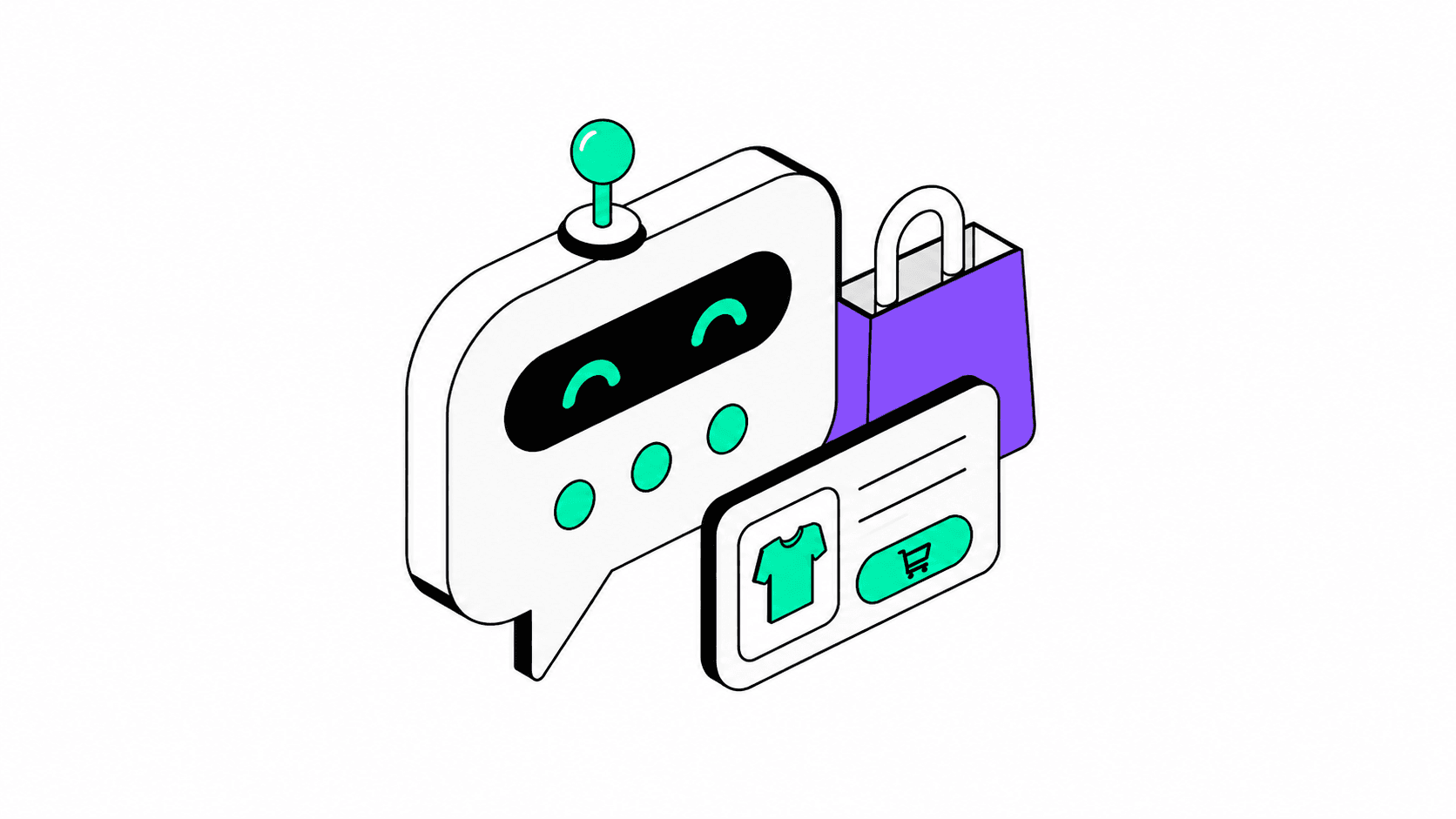
AI Chatbot for E-Commerce Growth in the Philippines
An AI chatbot empowered Philippine businesses with a practical and scalable way to answer customer questions 24/7, guide buyers toward the right product or service, and escalate complex concerns to a person, all without matching every increase in inquiry volume with additional staff.
The stronger strategy, however, is not simply to “install a bot.” Businesses need the right mix of selling platforms, accurate information, reliable integrations, clear engagement rules, and human oversight. In a market where customers move between Shopee, Lazada, TikTok Shop, Facebook Marketplace, Messenger, and branded websites, customer service must connect the entire buying journey.
The Philippine Statistics Authority estimated that the country’s digital economy reached ₱2.74 trillion in gross value added in 2025, equal to 9.8% of GDP. E-commerce represented 32.2% of digital-economy value added. (Philippine Statistics Authority) Growth does not remove the challenge as shoppers can compare prices and offers quickly, while lean business teams must support more channels without losing the humanness of a conversation.
Key Takeaways
- Marketplaces generate reach and transaction convenience, while a custom website provides greater control over branding, customer journeys, and business information.
- Customer service is part of conversion a fast, useful, natural conversation reduces uncertainty before a buyer commits.
- Scripted bots fit fixed menus and structured data collection, while large language model based chatbots handle varied language, context, and more complex inquiries.
- A dependable chatbot requires current business information, approved integrations, escalation rules, privacy controls, and continuous review.
- SOFI AI specializes in intelligent, natural conversational chatbots designed around each organization’s actual workflows.
Why Customer Service Fuels E-Commerce Growth
A selling platform can bring traffic, but it cannot resolve every concern that prevents a purchase. Customers still ask whether an item is available, compatible, returnable, and deliverable to their location. These are common sales questions.
When a buyer can speak with the seller, or they receive a useful, natural response on the seller’s behalf, it signals that an accountable business exists behind the listing.
The objective is not to make automation pretend to be human, but rather to make service responsive, clear, and genuinely helpful, with an easy path to a human agent whenever judgment is required.
A business that intends to scale needs two platforms: one for selling, and one for superb customer service.
Without the second, marketing can create more inquiries than the team can handle, response quality becomes inconsistent, and potential sales quietly disappear.
What an AI Chatbot for E-Commerce Can Do
An intelligent chatbot acts as a first-line customer service and sales assistant. It can be available 24/7, handle repetitive inquiries, collect relevant information, recommend approved next steps, and notify an administrator when a situation requires human attention.
This gives a lean team several practical “superpowers”:
Always-on first response. Answer common questions outside business hours and during campaign spikes.
Context-aware conversations. Follow a customer’s questions across a conversation instead of treating every message as an isolated inquiry.
Consistent brand persona. Communicate in a tone aligned with the business while adapting naturally to the customer’s language and level of formality.
Permitted memory and follow-up. Refer to previous conversations or initiate follow-ups when configured with appropriate consent, retention, and privacy controls.
Business actions. Use approved tools to capture leads, check order information, schedule appointments, retrieve product details, or alert an administrator.
Human escalation. Transfer difficult, sensitive, urgent, or low-confidence cases with the relevant conversation context attached.
Scripted Chatbots Versus LLM-Powered Chatbots
Not all chatbots are created equal. A large language model based chatbot is designed to interpret and generate language. Unlike a basic scripted bot, it can respond to a wider range of natural-language questions and maintain conversational context.
| Decision factor | Scripted or rule-based bot | LLM-powered conversational bot |
|---|---|---|
| Conversation style | Menus, keywords, and predefined branches | Natural-language questions and flexible phrasing |
| Best use | Fixed FAQs, forms, basic routing, and rigid information gathering | Product guidance, lead qualification, troubleshooting, and complex support |
| Strength | Predictable and easier to control | More natural, contextual, and adaptable |
| Main risk | Dead ends when the customer phrases something unexpectedly | Confident but inaccurate answers if knowledge and guardrails are weak |
Rule-based bots remain useful when a process must be highly deterministic. Modern AI chatbots are better suited to natural conversations because they can interpret varied wording and maintain context.
SOFI AI specializes in this newer generation of natural conversational chatbots. The bot’s capabilities can be selected around the business; remembering permitted customer context, following up, adopting a defined persona, using approved tools, or privately alerting an administrator when escalation is needed.
Risks to Avoid
Professional Recommendation: Start With the Business, Not the Bot
For a small online seller, the best first version may answer the 20 most frequent questions, capture order or lead details, and notify the owner when a customer needs help. This provides meaningful coverage without creating an unnecessarily complex system.
For a growing multichannel business, the priorities should be a shared knowledge source, customer-history rules, order or customer relationship management integrations, channel-specific workflows, and clear service-level expectations.
For high-value, complex, or regulated transactions, the bot should have a narrower scope, stricter approvals, detailed activity records, and faster human intervention. Automation should support judgment, not replace it when the consequences are significant.
SOFI AI’s role is to handle the complex design work: mapping conversations, organizing business knowledge, setting engagement rules, connecting reliable tools, defining escalation, and refining the bot based on real use.
The result is an intelligent and adaptive customer-service layer aligned with your business goals and current setup.
Build Customer Service That Scales With Your Store
An AI chatbot for e-commerce is most valuable when it combines natural conversation with accurate information, useful actions, privacy-conscious memory, and timely human escalation. That is how automation supports growth without making customer service feel cold or disconnected.
Every business has different priorities, resources, channels, and growth targets. Book a consultation with SOFI AI to assess your current setup, identify practical opportunities, and determine the right next steps for your organization.
During the call, we can review your highest-volume inquiries, suitable chatbot capabilities, integration needs, and escalation requirements. Let’s discuss what will work best for your organization. Schedule your call here.
Frequently Asked Questions
Yes. An AI chatbot can reduce buying friction by answering product questions, qualifying customer needs, recommending approved options, capturing leads, and guiding users toward checkout or booking. Its impact depends on response accuracy, integration quality, the strength of the offer, available traffic, and human follow-through. A chatbot supports the sales strategy; it does not replace it.
No. A scripted chatbot is often better for fixed forms, compliance-sensitive steps, and predictable routing. An LLM chatbot is stronger when customers use varied wording or require explanations and contextual guidance. Many businesses benefit from a hybrid system that combines conversational flexibility with controlled workflows.
At minimum, prepare your product or service information, frequently asked questions, pricing and promotion rules, payment and delivery policies, return or warranty terms, escalation contacts, brand tone, and the systems the bot may access. The quality and freshness of this information directly affect the quality of the customer experience.