
Beyond the Chatbot: How Prompt Engineering and Guardrails Drive Next-Gen AI Customer Service
Beyond the Chatbot: How Prompt Engineering and Guardrails Drive Next-Gen AI Customer Service
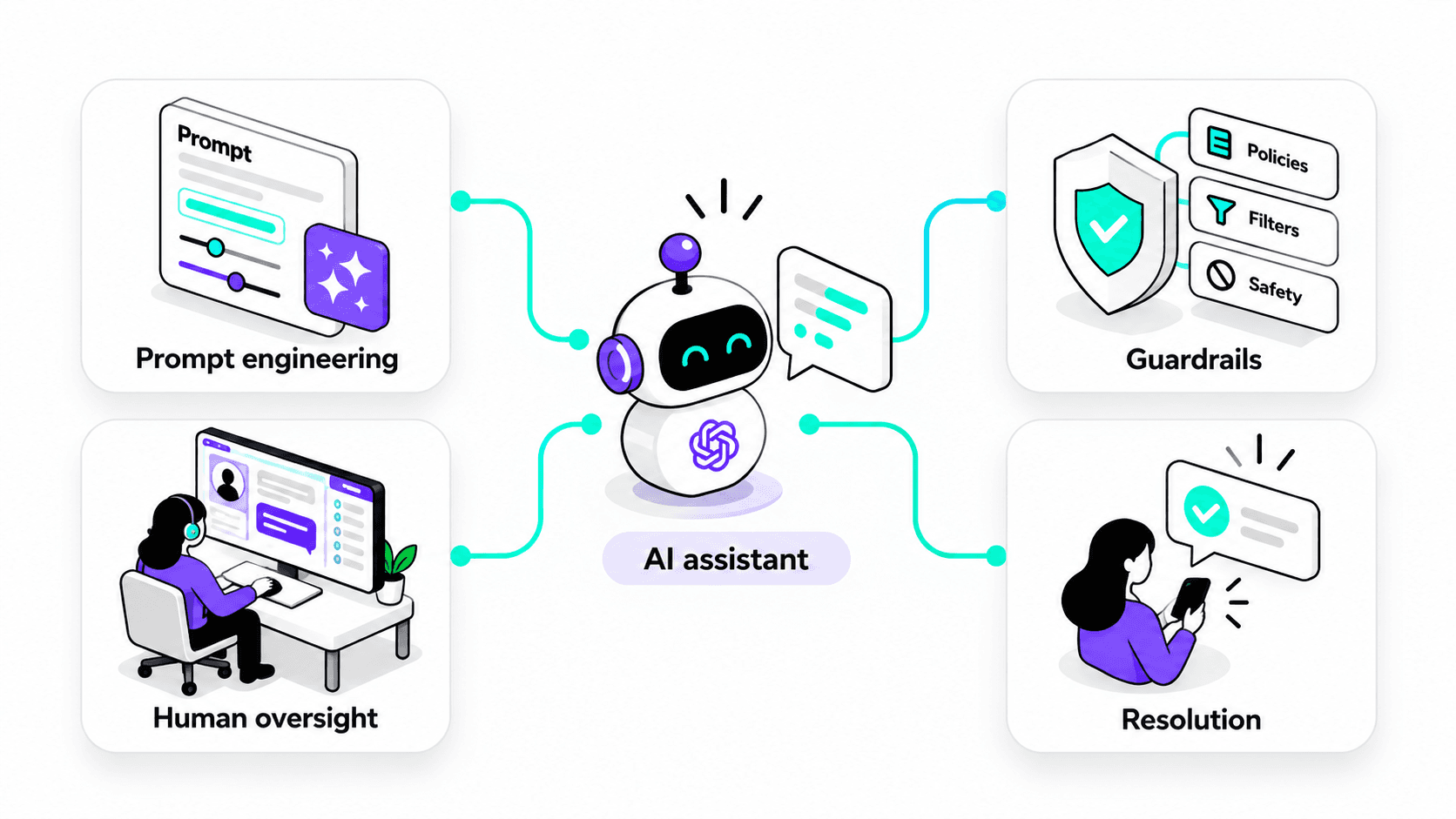
Deploying generative artificial intelligence in customer support requires moving beyond legacy decision trees to a dual-governance architecture: precision prompt engineering and active guardrails. For businesses operating in North America and the Philippines, where customer support operations must balance high service quality with strict regulatory compliance, this governance framework transforms raw large language models into dependable, enterprise-ready digital assets.
Key Takeaways
- Dual-layer governance. Sustainable AI customer service relies on prompt engineering to define behavior and context, paired with active guardrails to enforce safety, policy, and security boundaries.
- Intent versus entity distinction. Modern AI customer service moves past simple keyword matching by combining semantic intent parsing with accurate entity extraction.
- Risk mitigation. Input filtering prevents prompt injection and data leaks, while output validation prevents hallucinations and policy violations before responses reach the customer.
- Hybrid operations. A structured guardrail system includes deterministic logic to pass complex, sensitive, or high-frustration queries to human agents seamlessly.
Understanding User Query Architecture
Legacy customer service bots relied on simple keyword matching. If a customer typed "cancel," the system triggered a generic cancellation flow, regardless of whether the user wanted to cancel an order, cancel a subscription, or ask how to prevent a cancellation.
Generative AI handles user queries through semantic processing, breaking customer inputs into two fundamental components:
- Intent recognition. Identifying the customer’s core objective, such as requesting a refund, changing a shipping address, or troubleshooting a billing error.
- Entity extraction. Isolating the specific attributes needed to execute the request, such as an order ID, product name, or account email.
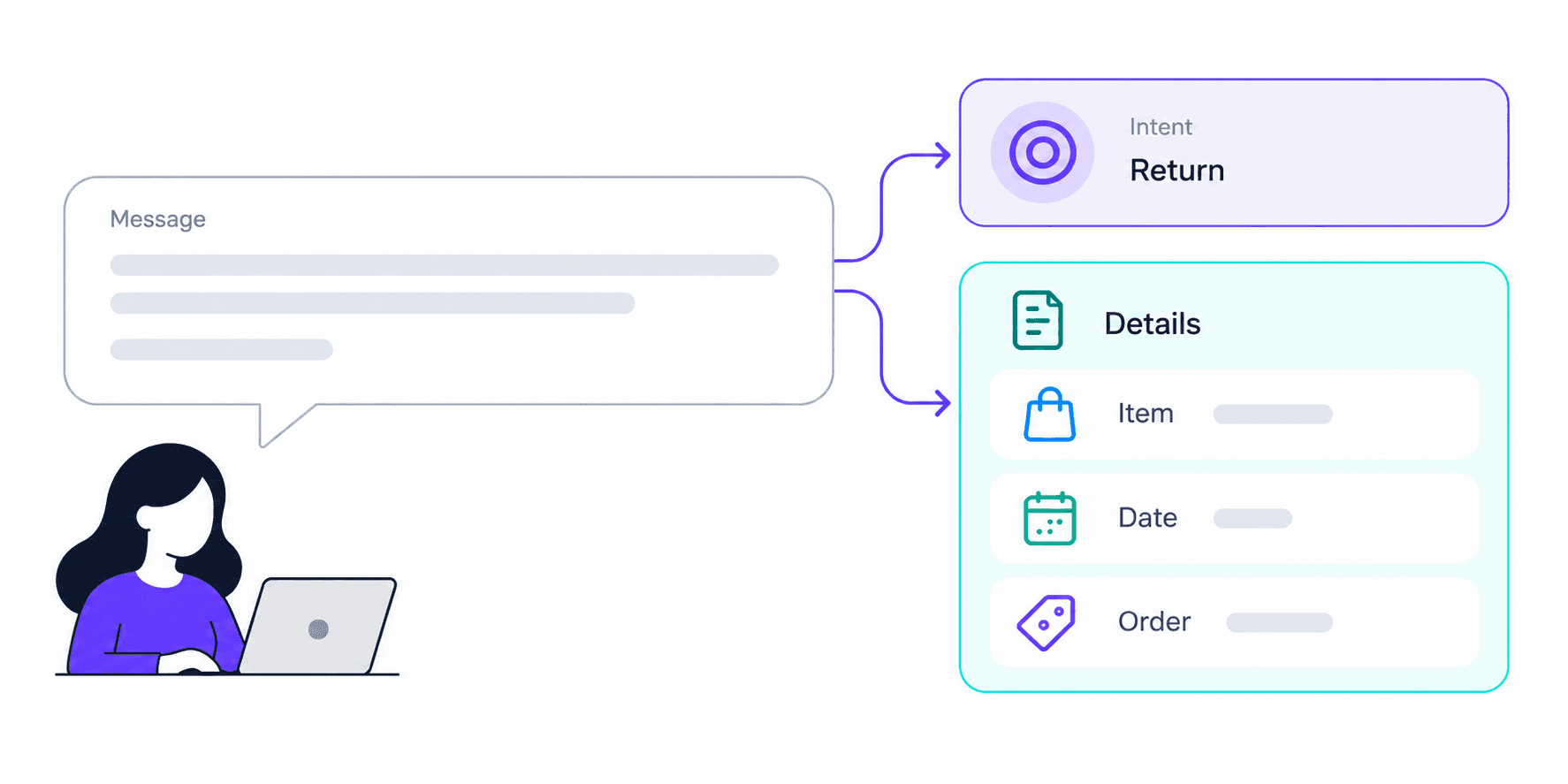
When an incoming query is structured this way, the AI system understands both what the customer wants and the contextual details required to fulfill the request. Understanding intent is only the first half of the equation, though. Controlling how the model acts on that understanding requires structured prompt engineering and safety guardrails.
Why AI Customer Service Guardrails and Prompt Engineering Matter
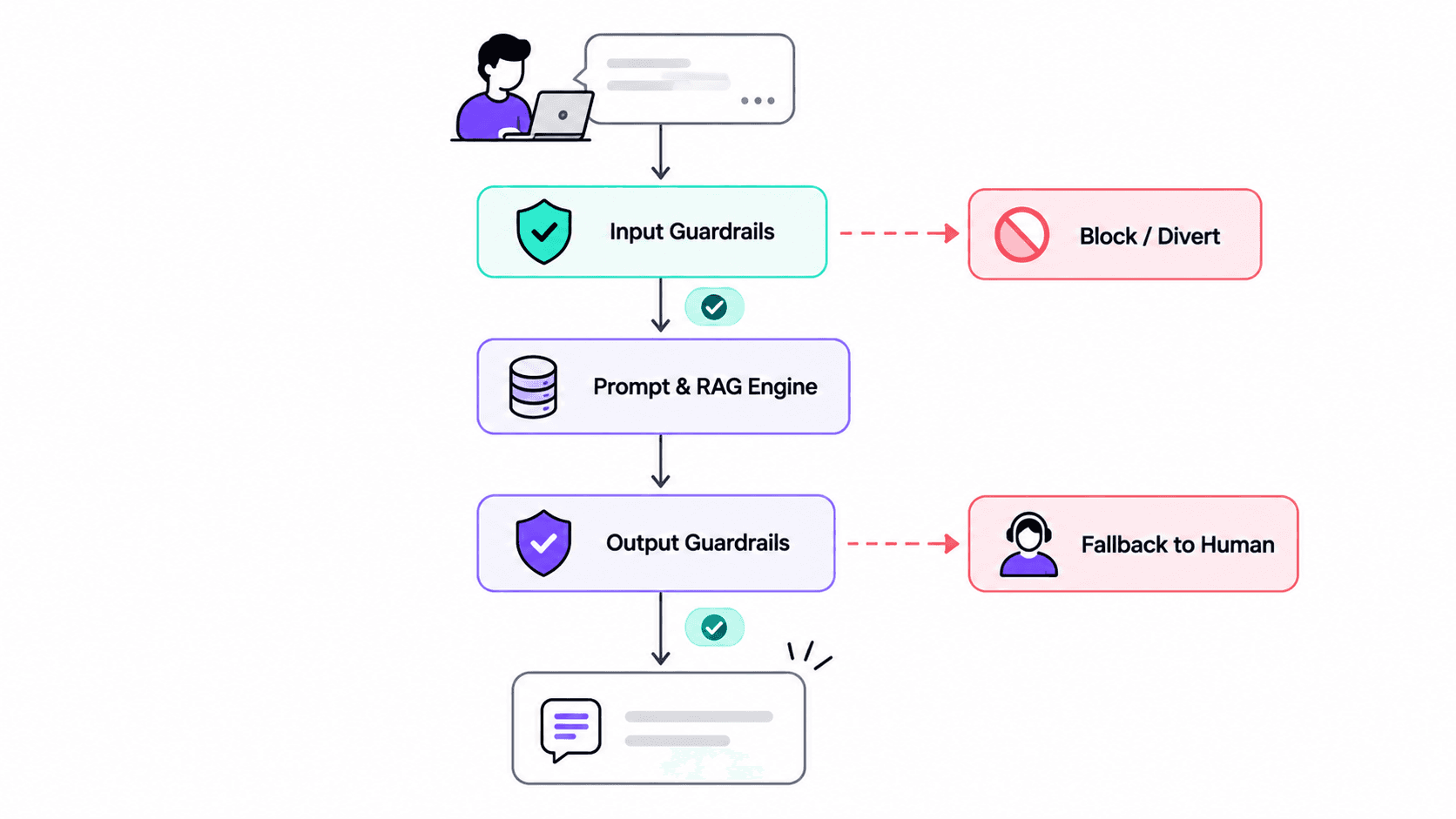
Deploying large language models directly to end users without structured intervention is an operational risk. Prompt engineering establishes the operational instructions for the AI, while AI customer service guardrails enforce compliance and safety in real time.
Prompt Engineering: Defining Role, Context, and Knowledge Boundary
Prompt engineering in an enterprise customer service context extends beyond writing clever instructions. It involves building a structured system prompt that defines:
- System persona. Establishing tone, empathy levels, and communication style aligned with your brand identity.
- Operational scope. Defining explicitly what the AI can and cannot do. For example, it may assist with tracking and returns but cannot issue refunds over a set threshold without manager approval.
- Retrieval-augmented generation (RAG). Dynamically retrieving real-time data from internal knowledge bases, ERPs, or CRMs and injecting it into the prompt context. This keeps answers anchored to verifiable source documents rather than general training data.
- Few-shot demonstration. Providing explicit examples of ideal responses for challenging scenarios within the prompt itself to anchor output quality.
Guardrail Systems: Input and Output Defense
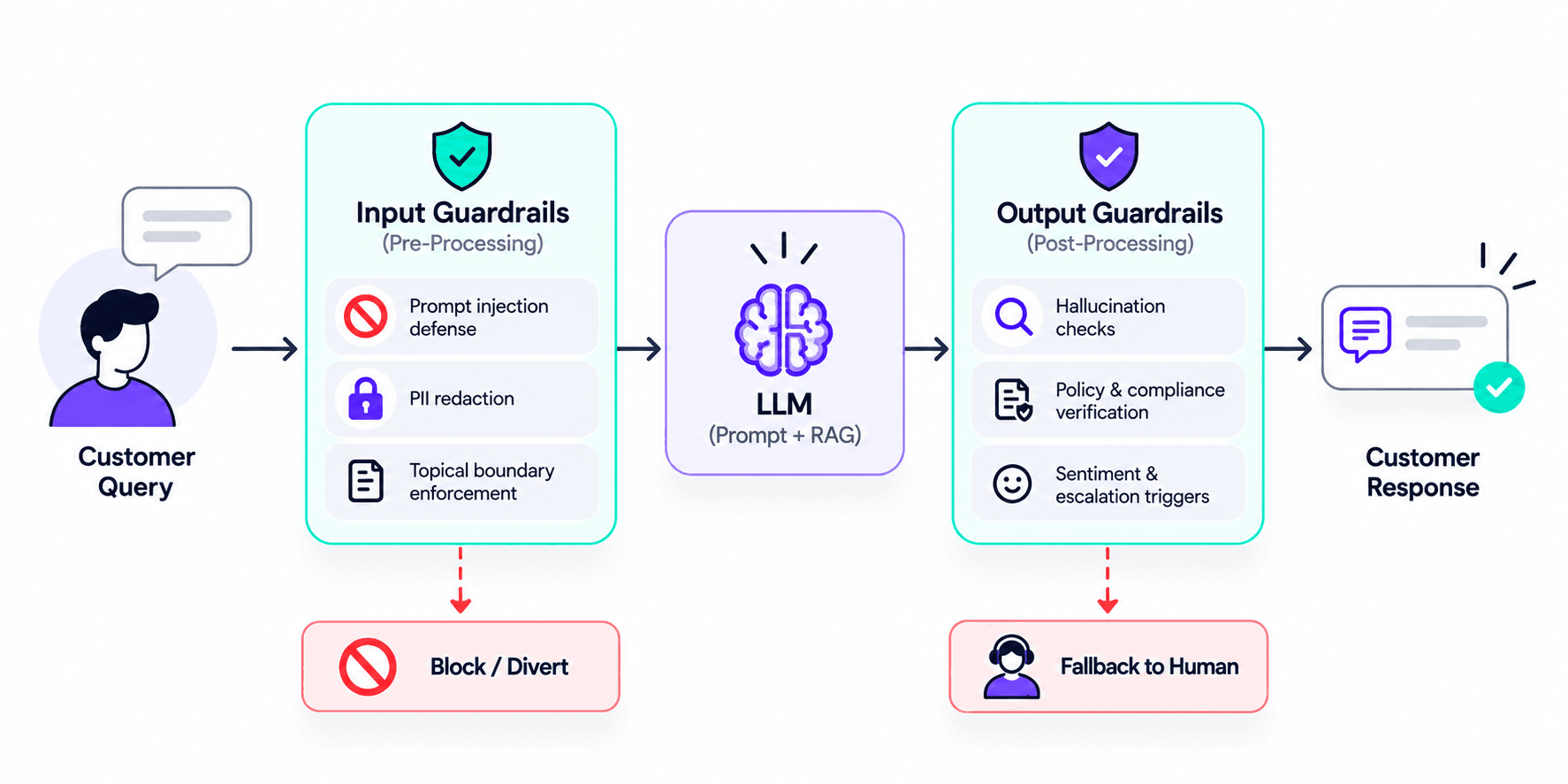
While prompt engineering guides the model’s intent, guardrails act as an independent evaluation layer surrounding the model.
Our Recommendation
When modernizing customer service architecture, leadership teams often face a tension between rapid automation and risk management. A balanced approach avoids all-or-nothing implementations.
Start by identifying high-volume, low-risk intent categories such as order tracking, return policy inquiries, and account verification to validate your prompt engineering and guardrail framework. Once your input and output filters demonstrate consistent accuracy and security, expand the system’s operational authority to transactional capabilities, such as processing exchanges or modifying account settings.
For organizations balancing onshore management with offshore operations in the Philippines, guardrailed AI serves as a powerful force multiplier. It equips customer service representatives with real-time suggested responses, automated ticket summarization, and instant policy lookups, raising baseline resolution quality across the entire team.
Every business has different priorities, systems, and compliance obligations. Book a consultation with SOFI AI to review your current support workflow, identify where guardrails are required, and determine the right next steps for your organization. Schedule your call here.
Frequently Asked Questions
AI customer service guardrails are programmable safety layers that sit between the user, the large language model, and backend business systems. They analyze incoming user prompts and outgoing AI responses in real time to prevent hallucinations, block malicious inputs, mask sensitive personal data, and ensure all communication adheres strictly to company policy and legal compliance standards.
Prompt engineering defines the role, context, tone, operational boundaries, and dynamic knowledge inputs, via retrieval-augmented generation, for an AI model. By providing structured system instructions and concrete response examples, prompt engineering ensures the AI understands intent, maintains brand voice, and responds accurately using verifiable company data rather than general assumptions.
Guardrail systems continuously analyze the context, sentiment, and intent of a conversation. If a customer expresses severe frustration, if the query exceeds the AI's authorized policy limits, or if an output guardrail detects a low confidence score in the generated answer, the system automatically triggers a seamless handoff. The full conversation transcript and extracted entities are then routed to a human agent for immediate resolution.